


The Ultimate Guide to Industrial Heavy-Duty Double Shaft Shredders: Engineering, Selection, and Applications
In the global push toward circular economy compliance, resource recovery, and zero-landfill mandates, primary size reduction stands as the single most critical mechanical bottleneck. Among size-reduction machinery, the heavy-duty double shaft shredder has emerged as the definitive workhorse across municipal solid waste (MSW) facilities, e-waste dismantling depots, scrap metal processors, and plastics recycling plants. This comprehensive technical guide analyzes operational mechanics, cutter blade metallurgy, drive system architectures, and practical integration strategies for industrial recycling operations.
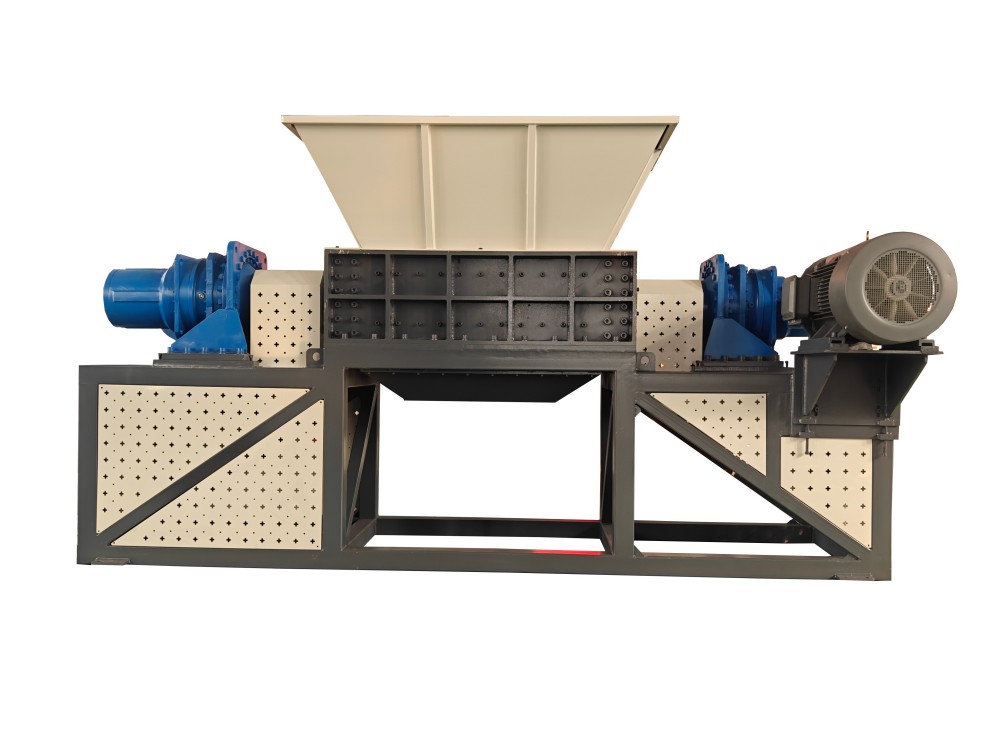
1. Mechanics of High-Torque, Low-Speed Shearing
Unlike high-speed hammer mills or impact crushers that rely on kinetic velocity to pulverize feed materials, heavy-duty double shaft shredders operate on the mechanical principle of low-speed, high-torque counter-rotational shearing. The rotor shafts typically operate between 10 and 25 revolutions per minute (RPM).
This low-speed operating philosophy brings decisive mechanical and process advantages:
- Suppression of Airborne Dust: Minimal rotational airflow prevents fine particulate plumes, creating a safer, compliant working atmosphere and significantly reducing explosion hazards when processing combustible fines.
- Drastic Noise Abatement: High-speed granulators can produce continuous noise levels exceeding 100 dB(A). Low-speed dual shafts run under 80–85 dB(A), simplifying environmental permitting and operator safety compliance.
- Zero Kickback and Material Splatter: The aggressive hook design pulls large, hollow, or elastic objects downward into the cutting chamber rather than repelling them upward into the hopper.
- Thermal Stability: Low surface-speed shearing minimizes frictional heat buildup, preventing heat-sensitive polymers from melting and smearing onto the cutting surfaces.
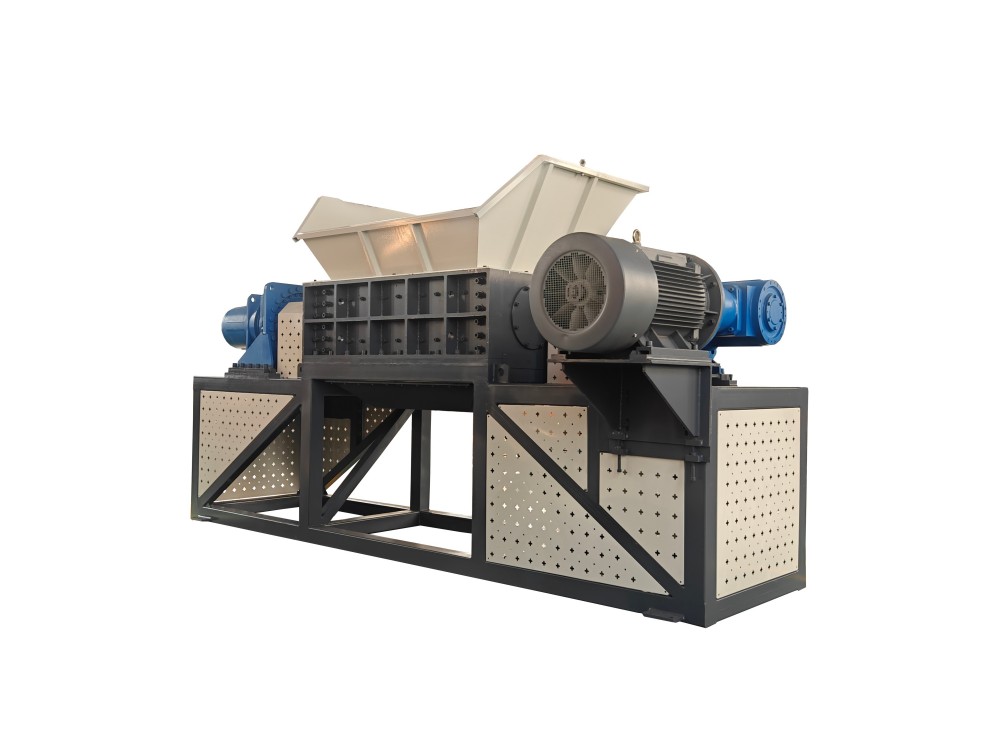
2. Rotor Metallurgy, Blade Geometries, and Chamber Engineering
The operational longevity and operational expenditure (OPEX) of a twin-shaft shredder depend primarily on cutter blade metallurgy and chamber machining precision. The cutting chamber experiences severe cyclic shock, bending moments, and localized shear stresses.
Cutter Blade Metallurgy
Blades are subjected to both abrasive wear and high-impact loading. Selecting the correct alloy steel grade is crucial:
- 42CrMo / High-Tensile Forged Alloy: Excellent impact toughness and resistance to shattering; ideal for primary demolition scrap and mixed municipal waste with non-crushable tramp metal risk.
- Cr12MoV / D2 Cold-Work Tool Steel: High carbon and chromium content delivering high wear resistance (quenched and tempered to HRC 58–60); perfect for abrasive plastics, electronic scrap, and rubber tires.
- Hardox® / Specialized Hardfacing Overlays: Employed in extreme-abrasion environments where on-site weld re-tipping is preferred over complete blade changeouts.
Hook Configuration and Knife Thickness
The thickness of the blade directly governs the resulting strip width of shredded material. Standard production setups utilize 20mm, 40mm, 50mm, 75mm, or 100mm knife thicknesses. Single-hook profiles exert the highest point pressure for fracturing thick cast parts, while multi-hook configurations (2, 3, or 5 hooks) offer rapid grabbing action for thin-walled plastic containers, films, and textiles.
3. Dedicated Material Processing Applications
Modern dual-shaft shredders are rarely generic; cutting chamber dimensions, motor kW ratings, and cutter tooth profiles are tailored to specific waste streams.
A. Large-Diameter Plastic Pipes and Heavy Extrusions
Extruded HDPE, PVC, and PP water pipes present severe feeding challenges due to continuous cylindrical walls and high elasticity. Standard single-shaft units without heavy ram systems often bounce these pipes. Dual counter-rotating shafts draw long pipe bundles directly into the interlocking teeth without prior cross-cutting.
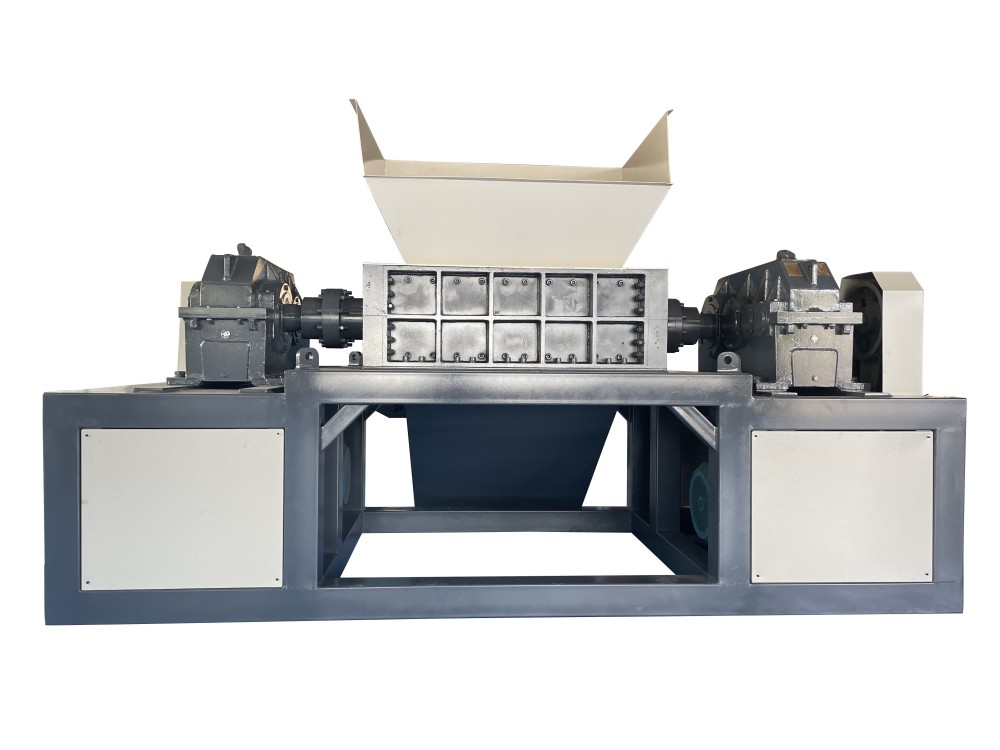
B. E-Waste (WEEE) and Circuit Board Processing
Waste Electrical and Electronic Equipment (WEEE) contains a complex composite of metal chassis, fiberglass-reinforced epoxy boards (PCBs), plastics, and precious metals. A specialized e-waste shredder fractures housings and frees boards without creating hazardous dust storms or destroying valuable components prior to downstream eddy current and optical sorting.
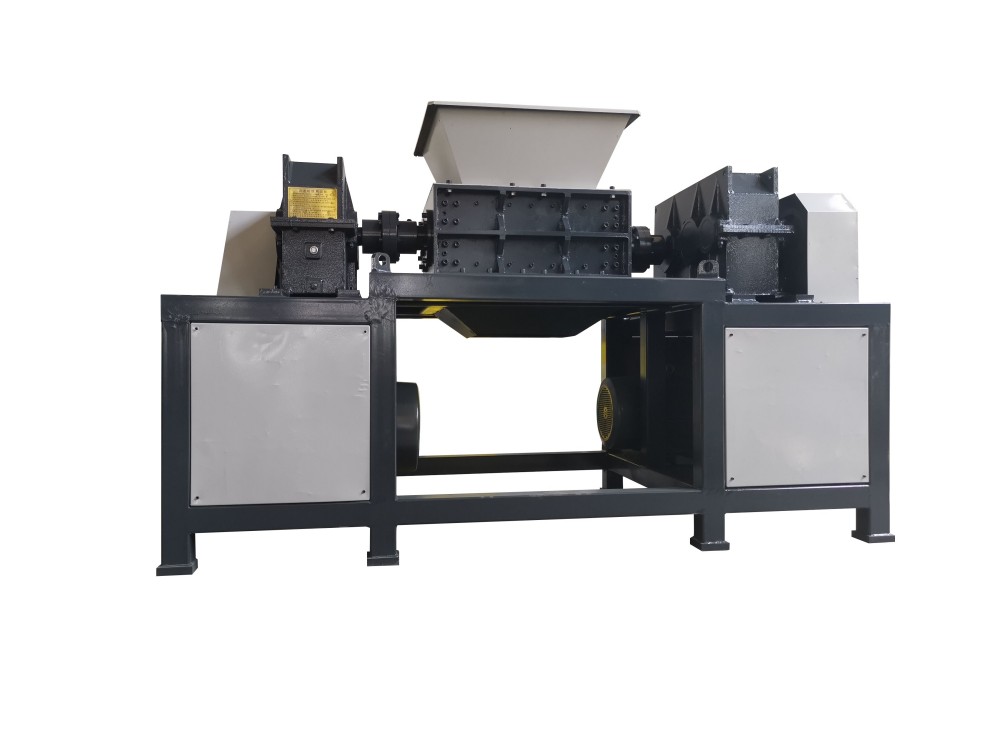
C. Heavy Solid Waste, MSW, and Bulky Commercial Refuse
Municipal solid waste (MSW) and industrial refuse contain unpredictable mixtures: old mattresses, wooden shipping pallets, cardboard drums, and light structural steels. Enclosed, high-capacity shredding units equipped with intelligent hydraulic or mechanical rams ensure positive feed delivery into the cutting mechanism while containing debris.
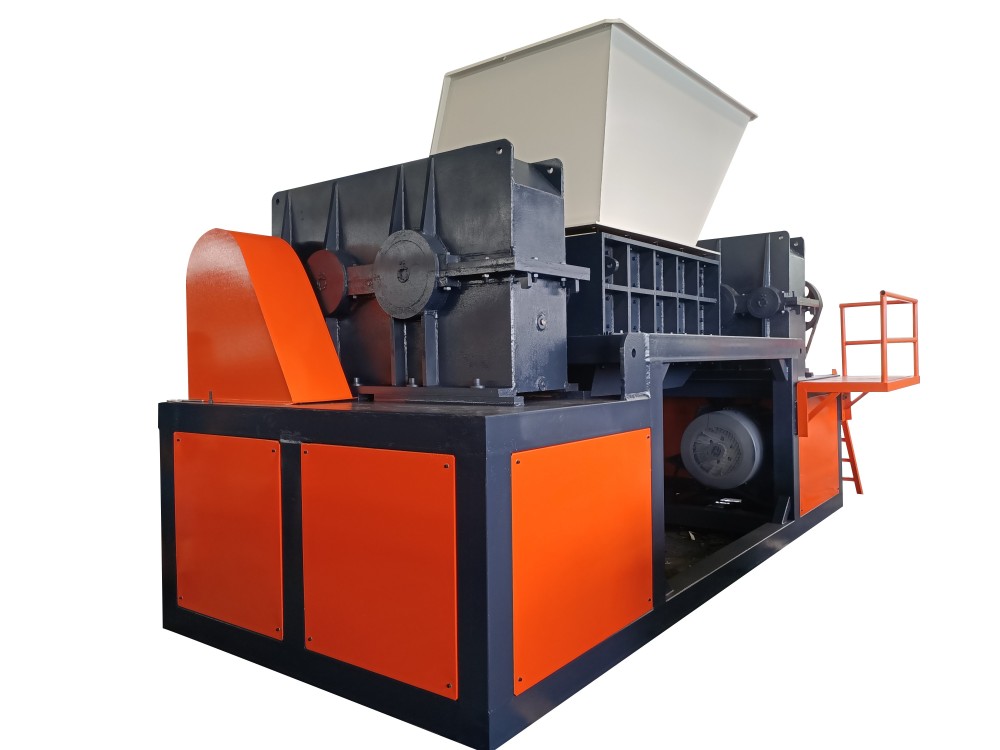
4. Plant Integration: Safety Enclosures, Platforms, and Control Logic
A high-performance shredder cannot operate effectively in isolation. In continuous commercial installations, the machine must interface cleanly with infeed conveyors, magnetic overband separators, vibratory feeders, and downstream processing stages.
Integrated Maintenance Platforms
Industrial shredders process hundreds of tons of material weekly. Operators must have safe, ergonomic access for knife inspections, lubrication, clearing non-shreddable tramp objects, and scheduled servicing. Heavy-duty structural steel platforms equipped with non-slip grating, safety kick-plates, and high-visibility handrails are essential for international plant safety compliance (OSHA, CE Machinery Directive).
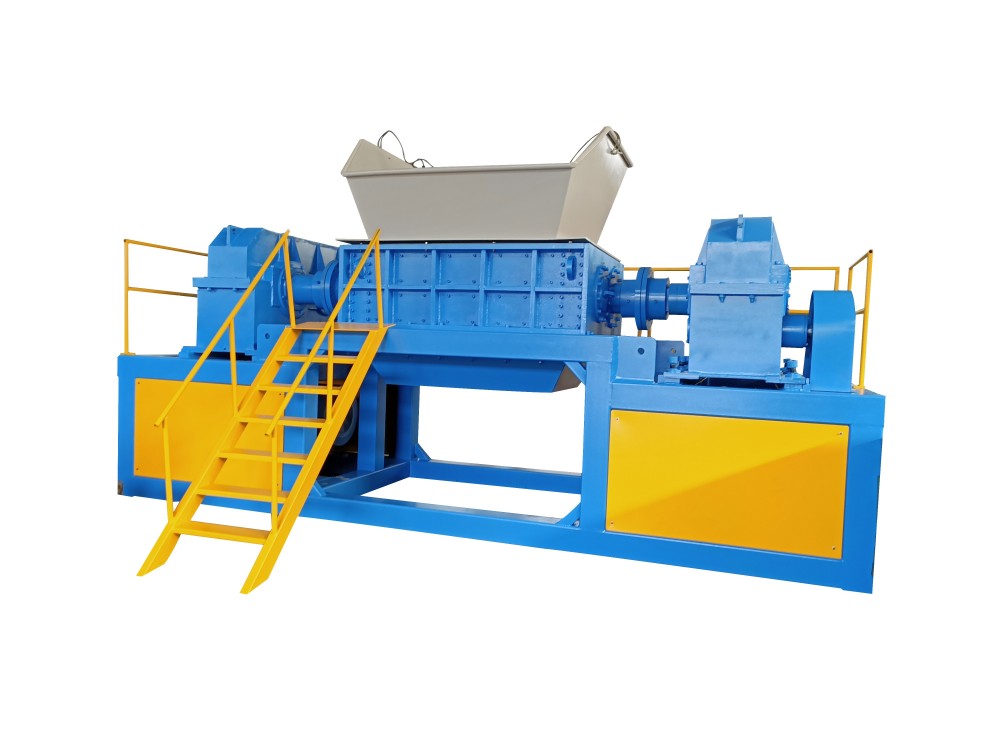
PLC Overload Monitoring & Automated Reversal
When an uncrushable object (such as an oversized solid steel die block or massive alloy shaft) enters the chamber, motor current spikes within milliseconds. Modern shredder control cabinets utilize programmable logic controllers (Siemens S7 or Schneider Electric) that continuously sample drive load current:
- Immediate Trip Sensing: If current crosses a pre-set threshold (typically 120–140% of rated amperage), the PLC stops rotation in milliseconds.
- Automated Reverse Cycle: The shafts reverse rotation for 2 to 5 seconds to dislodge the jammed piece and reposition the material.
- Forward Re-engagement: The machine attempts forward cutting again. If the blockage persists past 3 sequential auto-reverse attempts, the drive locks out and sounds an audible alarm for manual operator inspection.
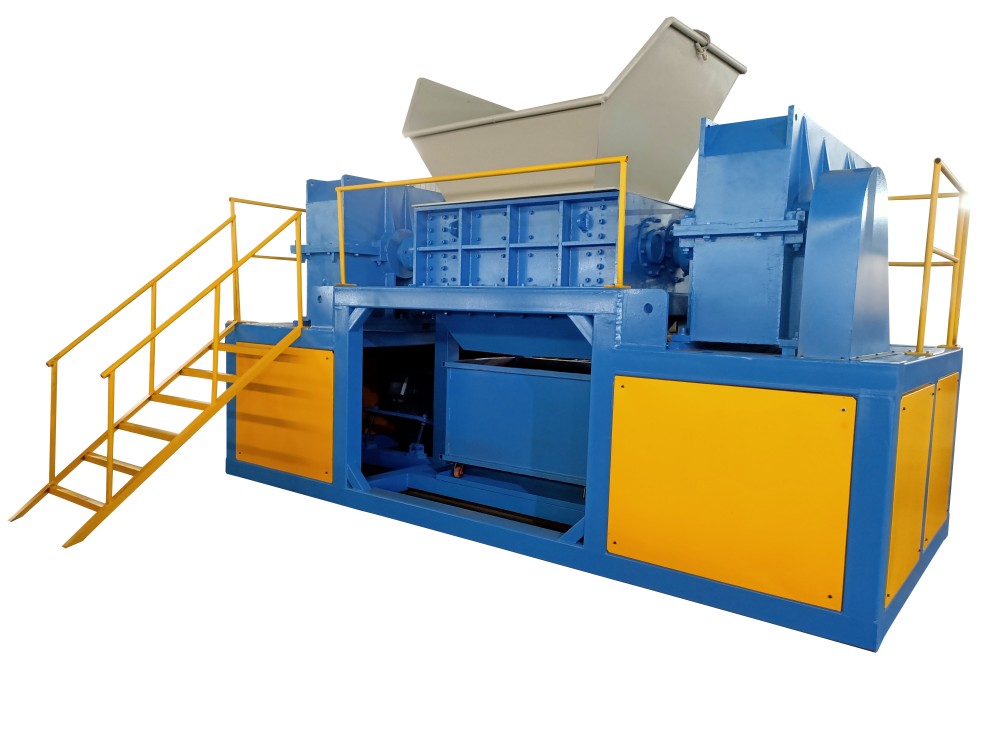
5. Sizing & Selection Framework: Specifying Your Machine
Specifying an undersized shredder leads to recurring motor trips, broken gearboxes, and excessive blade chipping. Specifying an oversized machine incurs unnecessary capital expenditure and elevated baseline electrical consumption. Use the comparative matrix below to match machinery capabilities to operational throughput targets:
| Machine Series | Rotor Chamber (mm) | Power Range (kW) | Throughput (Tons/Hour) | Target Primary Infeed |
|---|---|---|---|---|
| DSD-800 Series | 800 × 650 | 2 × 18.5 – 2 × 22 | 0.8 – 2.0 T/H | Light drums, small electronic scrap, cardboard cores, plastic crates |
| DSD-1000 Series | 1000 × 800 | 2 × 30 – 2 × 37 | 1.5 – 4.0 T/H | Plastic drums, automotive bumpers, large WEEE appliances, wood pallets |
| DSD-1200 Series | 1200 × 1000 | 2 × 45 – 2 × 55 | 3.5 – 7.0 T/H | Large-diameter HDPE/PVC pipes, light metal sheets, car tires, MSW |
| DSD-1600 Series | 1600 × 1250 | 2 × 75 – 2 × 110 | 6.0 – 15.0 T/H | Bulky MSW, automotive scrap, baled agricultural films, industrial refuse |
6. Preventative Maintenance & Total Cost of Ownership
To sustain steady processing output and keep operational costs low, plant maintenance teams should implement four standard preventative maintenance protocols:
- Blade Clearance Inspection: Measure the axial and radial clearance between adjacent counter-rotating knives bi-weekly. Excessive gap width causes thin, elastic materials (such as plastic films and textiles) to wedge between blades rather than sheer cleanly, driving up motor amps.
- Bearing Lubrication with High-Load Greases: Rotor bearings carry heavy radial shock loads. Use NLGI Grade 2 lithium-complex greases enriched with molybdenum disulfide (MoS2) for extreme-pressure (EP) protection.
- Planetary Gearbox Oil Changes: Perform initial synthetic gear oil replacement after the first 500 operating hours, and every 3,000 to 5,000 hours thereafter, monitoring for metal wear particles via magnetic drain plugs.
- Hardfacing and In-Situ Resharpening: Instead of scrapping dull cutters, apply tungsten-carbide or specialized hardfacing welding rods along the cutting edge profiles, followed by surface grinding back to factory tolerances.
Plan Your Size-Reduction System with Engineering Support
Every recycling stream presents distinct challenges in bulk density, moisture, abrasiveness, and non-shreddable tramp inclusion. Sizing the right combination of motor torque, cutter steel alloy, and chamber geometry directly dictates the profitability of your entire recycling or waste-to-energy process.
Ready to optimize your recycling operations? Reach out to our technical sales engineering team to discuss material testing, complete layout drawings, and customized machinery specifications tailored to your throughput goals.